4-Month Sleep Regression: Signs, Why It Happens, How Long It Lasts, and What to Do
If you felt like your newborn was finally making some progress in the sleep department only to start waking every hour, taking short naps, or fighting bedtime, you may be wondering…
"Is this the 4-month sleep regression?"
If your baby is around 3-5 months old, it probably is!
The good news? Your baby is doing exactly as expected and long stretches of sleep (with the right support) are right around the corner.
The not-so-good news? Unlike other sleep regressions, the 4-month sleep regression isn't really a phase that simply passes. It's actually a permanent change in how your baby's brain sleeps.
That probably sounds discouraging, but I promise it's actually a really exciting milestone in your baby's development. Once you understand what's happening, it becomes much easier to support your little one through it.
What Is the 4-Month Sleep Regression?
A sleep regression is a period when a baby who was sleeping relatively well suddenly starts waking more often, taking shorter naps, or resisting sleep. Sleep regressions are often linked to periods of rapid growth and development, and they typically resolve once your baby adjusts to those changes.
The 4-month sleep regression is a little different.
Unlike other sleep regressions that come and go, the 4-month sleep regression marks a permanent change in the way your baby's brain sleeps. Around 3–5 months of age, your baby's sleep begins to mature from a simple newborn sleep pattern into the more complex sleep cycles they'll have throughout childhood and adulthood.
This developmental shift often happens around four months of age—which is why it's called the 4-month sleep regression—and it's what can lead to increased night wakings, short naps, false starts, and other changes in sleep.
Signs of the 4-Month Sleep Regression
Every baby is different, but some of the most common signs include:
Waking more frequently during the night
False starts (waking 45 minutes to 2 hours after bedtime)
Short naps
Early morning wake-ups
Needing more help falling asleep
Suddenly resisting naps or bedtime
Seeming harder to settle than before
Many parents feel like these changes happen overnight. One day their baby is sleeping relatively well, and the next they're wondering what happened.
Why Does the 4-Month Sleep Regression Happen?
To understand why sleep suddenly changes, let's first look at how newborn sleep works.
Newborn Sleep Is Different
Newborns don't have the same sleep cycles that older babies, children, and adults do.
Instead, they move between just two stages of sleep:
Active sleep
Quiet sleep
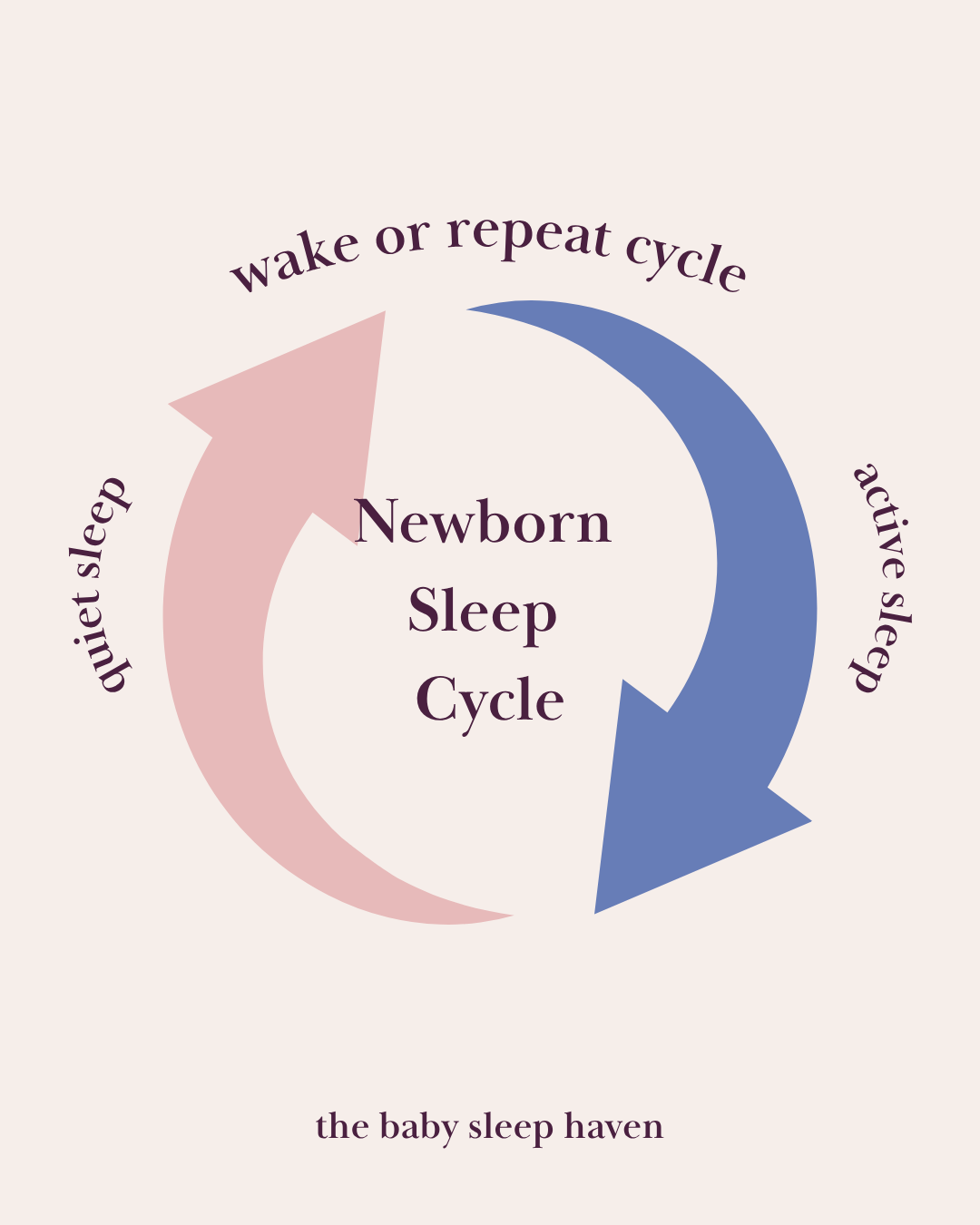
Active sleep is exactly what it sounds like. Babies may squirm, grunt, smile, stretch, make noises, or even briefly open their eyes while remaining asleep.
Quiet sleep is deeper, calmer sleep.
Newborns spend about 50% of their sleep in active (REM) sleep, compared to only about 20% in adults.
This is one of the reasons newborn sleep often seems noisy and unpredictable.
The Big Change Around Four Months
Somewhere between 3 and 5 months, your baby's sleep begins to mature.
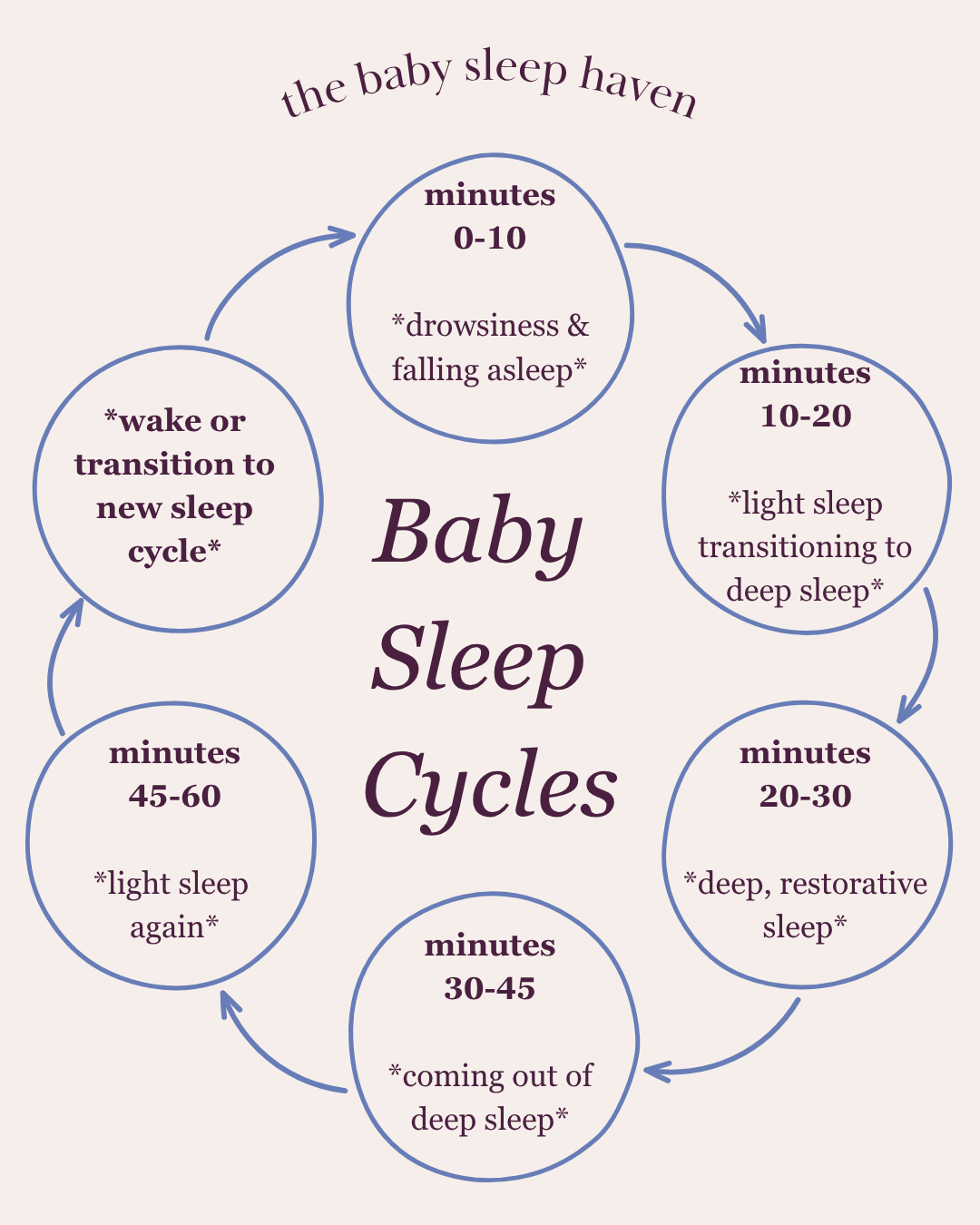
Instead of just two stages of sleep, they now cycle through:
Three stages of non-REM (NREM) sleep
One stage of REM sleep
Each sleep cycle lasts roughly 45-60 minutes, and babies move through these cycles over and over throughout the night.
While this creates deeper, more restorative sleep in the long run, it also makes sleep much more complex.
Think of It Like a Swimming Pool
I like to compare newborn sleep to splashing around in a kiddie pool.
The water is shallow. It doesn't require much skill to move around.
Mature sleep is like diving into the deep end.
Now your baby has to learn how to move from light sleep into deep sleep and back again without fully waking. That's a much more complicated skill.
Up until this point, many babies have relied on their parents to help them fall asleep at bedtime and after night wakings. As sleep becomes more mature, transitioning between sleep cycles becomes more challenging, so babies often ask for that same help even more frequently.
Doesn't Deeper Sleep Mean Better Sleep?
Eventually, yes.
But first there's a learning curve.
Every 45-60 minutes, your baby briefly enters a lighter stage of sleep before beginning another sleep cycle.
If they don't yet know how to fall asleep independently, they often fully wake and look for the same conditions they had when they first fell asleep—whether that's rocking, feeding, bouncing, or being held.
That's why parents often notice:
False starts after bedtime
Short naps
More frequent night wakings
These are some of the hallmark signs of the 4-month sleep regression.
How Long Does the 4-Month Sleep Regression Last?
Here's the honest answer: The sleep regression itself doesn't really end.
Your baby's sleep has permanently matured, so they won't go back to sleeping like a newborn.
The good news is that the constant wakings don't have to become your new normal. As babies learn to connect sleep cycles more independently, sleep usually becomes much more predictable again.
What Should You Do During the 4-Month Sleep Regression?
First, remember that this is a normal and necessary stage of development. It won’t last forever! There are several things that can help during this transition and help your baby sleep.
Keep an Age-Appropriate Schedule
An under or overtired baby often has an even harder time transitioning between sleep cycles. Paying attention to wake windows and total daytime sleep can make a big difference. Need some help figuring out what your baby’s schedule should look like? Check out the Nap Guide!
Stick With a Consistent Bedtime Routine
A predictable bedtime routine signals to your baby's brain that sleep is coming and can make bedtime feel calmer and more familiar. Read this blogpost next to create the best bedtime routine for your baby.
Practice the Pause
If your baby stirs between sleep cycles, give them a minute before rushing in. Sometimes they'll surprise you by settling back to sleep on their own.
Consider Teaching Independent Sleep Skills
Between 4 and 6 months, many babies are developmentally ready to learn how to fall asleep independently.
This doesn't mean every family needs to sleep train. If you're happy rocking your baby to sleep or safely co-sleeping, that's your family's decision.

But if the frequent wakings have become exhausting and unsustainable, this can be a wonderful time to teach your baby a new skill!
When babies learn to go from fully awake to fully asleep on their own, they're much more likely to reconnect sleep cycles without needing your help each time they briefly wake. The result is often longer stretches of sleep, more consistent naps, and a more well-rested family.
Which Sleep Training Method Is Best?
One of the biggest misconceptions about sleep training is that there's only one way to do it.
The truth is, there are different approaches, and the best method depends on your baby's temperament, your parenting style, and your family's goals.
I've put together a complete guide comparing the four sleep training methods I use with families—including who each method works best for and how to choose the right fit for your baby.
👉 Read my guide to the four sleep training methods here.
Final Thoughts
The 4-month sleep regression can leave even the most confident parents feeling exhausted and wondering what changed.
I promise, nothing has gone wrong! Your baby's sleep is maturing exactly as it's supposed to.
While this transition is permanent, the frequent wakings don't have to last forever. Whether you choose to simply support your baby through this stage or teach independent sleep skills, understanding what's happening is the first step toward better sleep.
Online Baby Sleep Consultant
Maybe you're reading this during another middle-of-the-night wake-up or while contact napping for the third time today. Wherever you are, I want you to know this: you're not failing, and your baby isn't broken.
Sleep can feel incredibly overwhelming when you're trying to piece together advice from Google, social media, and well-meaning friends. You don't have to do that alone.
If you're ready for personalized support, I'd love to help you create a plan that feels right for your family and gets everyone sleeping better.
Learn more about working together here.
Frequently Asked Questions
When does the 4-month sleep regression start?
Most babies experience it sometime between 3 and 5 months of age, although every baby develops on their own timeline.
How long does the 4-month sleep regression last?
The change in sleep is permanent, but the frequent wakings usually improve as babies learn to connect sleep cycles more independently.
Why is my 4-month-old waking every hour?
Around this age, babies begin cycling through lighter and deeper stages of sleep. If they need help falling asleep at bedtime, they often look for that same help each time they transition between sleep cycles.
Can you sleep train during the 4-month sleep regression?
Many babies are developmentally ready to learn independent sleep skills between 4 and 6 months. Every family is different, so the right timing depends on your baby's development and your family's goals.
Do all babies go through the 4-month sleep regression?
All babies experience this biological change in sleep. However, not every baby has significant sleep disruptions, and some move through the transition more smoothly than others.
